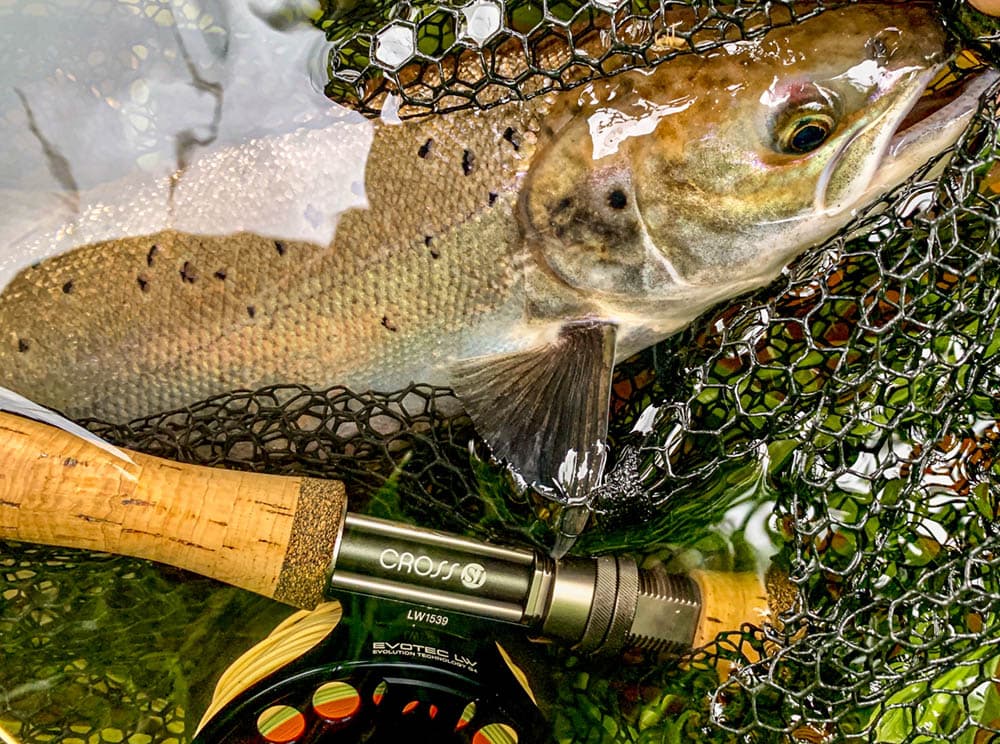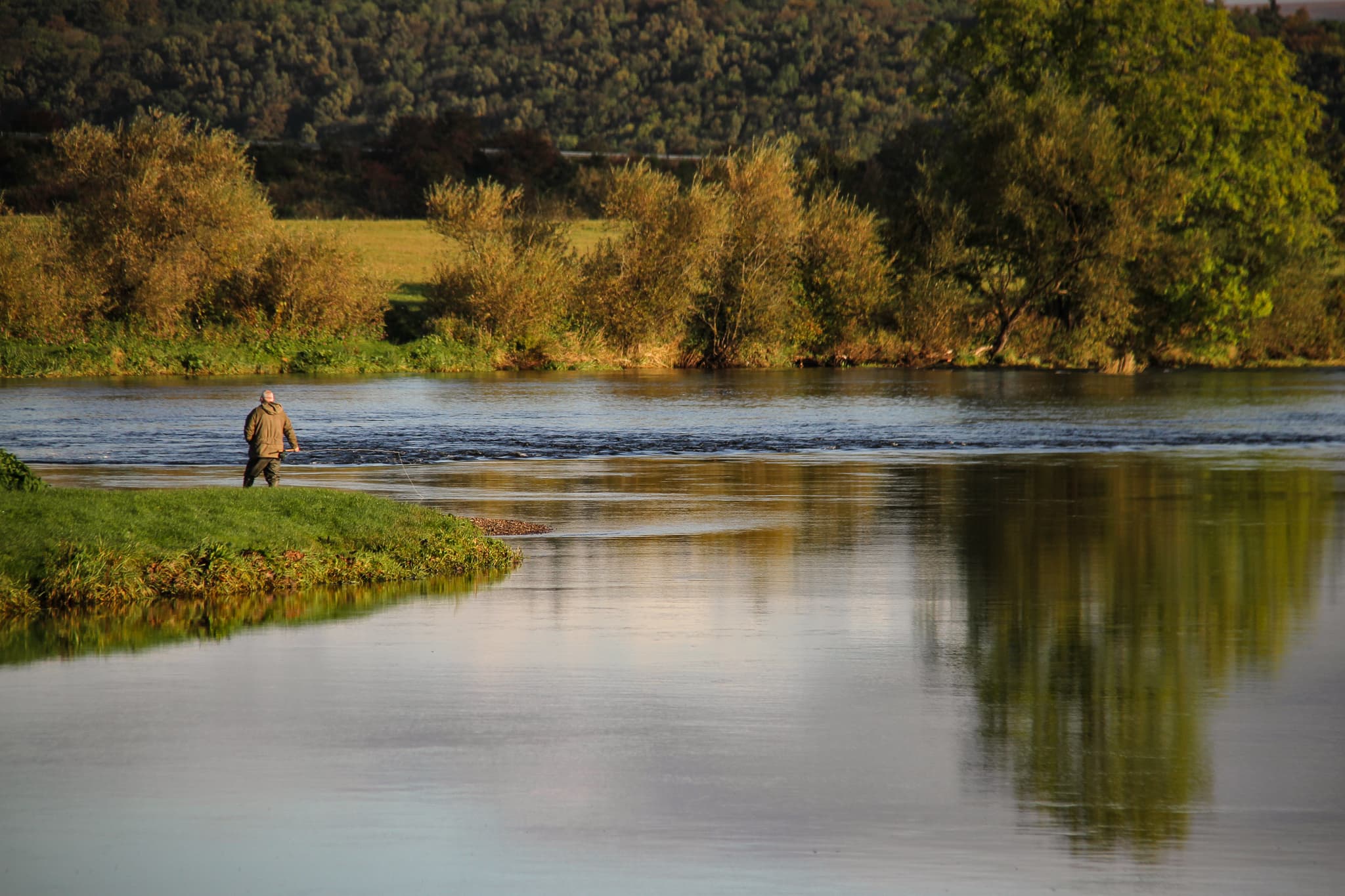
As the salmon season kicks off, anglers return to the banks of the Forth rivers, eager to cast their lines in hopes of landing a springer. But early season fishing also brings an important responsibility — understanding the difference between kelts and springers, and handling both with care.
Kelts and Springers
Kelts are post-spawning fish making their way back to sea after overwintering in freshwater. They are easily identified by their thinner bodies, loose skin, and duller colouration. Springers, by contrast, are vibrant, sea-fresh fish that have recently arrived from the ocean — the primary target for early-season sport fishing.
Knowing the difference matters. Kelts are future spawners. With enough time at sea to recover their condition, many will return to run the river and spawn again. Their survival contributes directly to the long-term health of our salmon stocks.
Springers, meanwhile, will remain in the river throughout the season before spawning. They represent a vital contribution to the genetic diversity and sustainability of our fisheries.
Best Handling Practices
Whether you are releasing a kelt or returning a springer, the same principles apply:
- Use appropriate tackle and play fish efficiently to minimise exhaustion
- Wet your hands before touching any fish, to preserve the protective slime coating
- Keep the fish in the water during hook removal where possible
- Support the fish gently under the belly and tail — never grip by the gills or jaw
- Use barbless hooks to reduce tissue damage and speed up release
- Allow the fish time to recover before release, supporting it in the current until it swims away under its own power
Ethical angling is stewardship. Every fish handled well is an investment in the future of our rivers. We encourage all anglers on the Forth this season to prioritise fish welfare — for the long-term health of our waterways and for everyone who fishes them after us.